
Understanding how our minds process information reveals profound differences between experts and novices, shaping everything from learning strategies to professional performance.

🧠 The Foundation: What Cognitive Load Really Means
Cognitive load theory has revolutionized our understanding of how the human brain processes and retains information. At its core, this concept describes the amount of mental effort being used in working memory, which acts as a bottleneck for learning and performance. The theory distinguishes between three types of cognitive load: intrinsic load (inherent difficulty of the material), extraneous load (how information is presented), and germane load (the mental effort dedicated to creating lasting learning schemas).
When we examine cognitive load through the lens of expertise, fascinating patterns emerge. The working memory capacity remains relatively constant across individuals, yet experts somehow manage to handle significantly more complex information than beginners. This apparent contradiction unlocks critical insights into skill development and mastery.
Research consistently demonstrates that experts don’t possess superhuman memory capabilities. Instead, they’ve developed sophisticated mental structures called schemas that chunk information into meaningful patterns. These cognitive frameworks allow experts to process what appears as dozens of separate elements to a novice as a single, unified concept.
Breaking Down the Expertise Spectrum 📊
The journey from novice to expert involves dramatic transformations in how cognitive resources are allocated and utilized. Understanding these transitions helps us optimize learning pathways and training methodologies across disciplines.
The Novice Experience: Overwhelm and Discovery
Beginners face the highest cognitive load when encountering new domains. Every element demands conscious attention, and the lack of established schemas means each piece of information occupies precious working memory space. A novice chess player, for instance, must consciously evaluate every piece position, possible move, and potential consequence independently.
This cognitive overload explains why beginners often feel exhausted after brief learning sessions. Their brains are working at maximum capacity, struggling to identify patterns and create initial mental frameworks. The intrinsic load is high because everything is genuinely new and unfamiliar.
During this phase, extraneous cognitive load becomes particularly problematic. Poor instructional design, unclear explanations, or excessive information can push total cognitive load beyond working memory capacity, resulting in learning failure. This is why simplified, well-structured introductory materials prove essential for skill acquisition.
The Intermediate Transition: Building Mental Architecture
As learners progress beyond the novice stage, they begin developing basic schemas that reduce cognitive load for familiar scenarios. This intermediate phase is characterized by inconsistent performance—moments of competence mixed with confusion when encountering variations or complex situations.
Intermediate learners have automated some basic processes, freeing up cognitive resources for higher-level thinking. However, their schemas remain rigid and context-dependent. They may perform well in practiced situations but struggle when conditions change slightly or when multiple concepts must be integrated simultaneously.
The cognitive load variance at this stage is particularly notable. Tasks that align with established schemas feel manageable, while novel challenges can quickly overwhelm. This creates the “intermediate plateau” where learners feel stuck, making progress requires expanding and refining their mental frameworks rather than simply accumulating more facts.
Expert Mastery: Effortless Complexity
True expertise manifests as the ability to handle extraordinary complexity with apparent ease. Experts have developed extensive, flexible schemas that automatically organize information into meaningful patterns. What occupies seven separate slots in a novice’s working memory might constitute a single chunk for an expert.
Expert surgeons, for example, don’t consciously think about each instrument, anatomical structure, or procedural step during routine operations. These elements have been integrated into comprehensive schemas that operate largely automatically, leaving cognitive resources available for patient-specific considerations and handling unexpected complications.
Interestingly, experts sometimes struggle to teach beginners effectively because they’ve forgotten what it’s like to lack their sophisticated mental frameworks. This phenomenon, called the “curse of knowledge,” occurs because expert schemas have become so automated that they’re difficult to decompose into novice-friendly components.
⚙️ Mechanisms Behind Cognitive Load Reduction
Understanding how expertise reduces cognitive load reveals actionable strategies for accelerating skill development and optimizing performance across any domain.
Schema Development and Pattern Recognition
Schemas represent organized knowledge structures that allow the brain to treat multiple elements as single units. When a chess grandmaster glances at a board, they don’t see 32 individual pieces but rather recognize established patterns, tactical motifs, and strategic configurations instantly.
This pattern recognition happens automatically and unconsciously for experts, dramatically reducing cognitive load. Research using eye-tracking technology shows that experts fixate on different, more strategically relevant information than novices, extracting more meaning from fewer visual samples.
The development of schemas requires extensive practice with feedback. Deliberate practice that challenges existing schemas while providing corrective information proves most effective for building robust, flexible mental frameworks. Simple repetition without challenge or feedback produces limited schema refinement.
Automation and Procedural Memory
As skills develop, many processes transition from conscious, controlled processing to automatic execution. This automation frees working memory for other tasks. Experienced drivers navigate familiar routes while holding conversations, planning their day, or listening to podcasts—tasks that would overwhelm a new driver.
Procedural memory, which governs automated skills, operates independently of working memory limits. Once skills become proceduralized, they impose minimal cognitive load, allowing experts to stack multiple complex activities simultaneously without performance degradation.
However, automation requires careful cultivation. Premature automation of incorrect techniques creates persistent problems, as automated procedures resist modification. This is why initial learning phases emphasize correct form and technique—establishing proper patterns before automation occurs.
Attention Allocation and Strategic Focus
Experts don’t just process information differently; they also allocate attention more strategically. While novices distribute attention broadly across all available information, experts rapidly identify and focus on relevant cues while filtering out distractions.
This selective attention isn’t about ignoring information but rather efficiently deploying limited cognitive resources where they generate the most value. Expert radiologists can spot subtle abnormalities that novices miss not because they have better vision but because their schemas direct attention to diagnostically relevant features.
Studies demonstrate that experts actually see less but understand more. Their efficient attention allocation means they extract maximum meaning from minimal information, achieving superior performance with reduced cognitive effort.
🎯 Practical Implications for Learning and Training
Recognizing cognitive load variances across expertise levels transforms how we approach education, training, and skill development.
Adaptive Instructional Design
Effective instruction must adapt to learners’ expertise levels. Novices benefit from simplified presentations, worked examples, and explicit guidance that reduces extraneous cognitive load. Segmented information, clear visualizations, and step-by-step procedures help beginners manage limited working memory capacity.
As learners progress, instructional approaches should evolve. Intermediate learners benefit from problem-solving opportunities, comparative examples, and challenges that refine and expand existing schemas. Fading guidance gradually increases cognitive demand, building capacity for independent performance.
For advanced learners and experts, instructional methods should emphasize integration, complexity, and novel challenges. Experts can handle higher cognitive loads but need tasks that push boundaries and prevent schema stagnation. Case studies, complex simulations, and ill-defined problems maintain engagement and continued development.
The Progression Principle
Training programs must recognize that what works for novices can be counterproductive for experts, and vice versa. The progression principle suggests that instructional methods should match learners’ cognitive load management capabilities.
- Beginners need structure, guidance, and reduced complexity to prevent cognitive overload
- Intermediate learners require balanced challenge and support to expand schemas
- Advanced practitioners benefit from complexity, minimal guidance, and authentic problem-solving
- Experts need novel challenges and cross-domain integration to maintain growth
This progression isn’t simply about difficulty level but about matching cognitive demands to mental architecture. A highly challenging task with appropriate scaffolding might be ideal for an intermediate learner but frustrating for both complete novices and true experts.
Deliberate Practice with Cognitive Awareness
Understanding cognitive load helps optimize practice activities. Deliberate practice should target the edge of current capabilities—challenging enough to promote schema development but not so overwhelming that cognitive overload prevents learning.
Practitioners can monitor their own cognitive load as a training signal. Tasks that feel neither overwhelming nor effortless likely occupy the optimal learning zone. When cognitive load feels excessive, breaking down the task, seeking guidance, or reducing complexity becomes appropriate. When tasks feel too easy, increasing complexity or removing supports accelerates development.
This metacognitive awareness—thinking about one’s own thinking—becomes increasingly important for self-directed learning. Learners who understand their cognitive load status can self-regulate practice more effectively than those who simply follow predetermined programs.
💡 Applications Across Professional Domains
The principles of cognitive load variance manifest differently across fields but reveal universal patterns that enhance professional development.
Medical Training and Clinical Expertise
Medical education provides clear examples of cognitive load management across expertise levels. First-year students struggle with basic anatomy and terminology, experiencing high cognitive load from information that seems elementary to practicing physicians. Clinical rotations introduce overwhelming complexity as students attempt to integrate theoretical knowledge with patient care.
Residency training progressively builds schemas for diagnosis, treatment planning, and procedural skills. Attending physicians demonstrate expert pattern recognition, rapidly identifying clinical presentations and managing multiple patients simultaneously with reduced apparent effort.
Simulation-based training has revolutionized medical education by allowing controlled cognitive load management. Scenarios can be calibrated to learner expertise, introducing complexity progressively while providing safe environments for schema development without patient risk.
Technology and Software Development
Programming expertise follows similar cognitive load progressions. Novice programmers struggle with syntax, basic logic structures, and debugging—elements that consume minimal cognitive resources for experienced developers. The cognitive load of understanding code structure, variable scope, and control flow gradually decreases as schemas develop.
Expert programmers can read and understand complex codebases rapidly, recognizing design patterns, architectural decisions, and potential issues at a glance. They’ve automated routine coding tasks, freeing cognitive resources for system design, optimization, and creative problem-solving.
Code reviews reveal these expertise differences vividly. Novices focus on surface-level issues and syntax, while experts immediately identify architectural concerns, performance implications, and maintainability issues that remain invisible to less experienced developers.
Athletic Performance and Coaching
Sports provide tangible demonstrations of cognitive load variance. Beginner athletes must consciously control each movement, monitor form, and remember sequences—a cognitively demanding process that produces slow, awkward performance. This explains why new movements feel exhausting despite limited physical exertion.
As athletic skills develop, movement patterns become automated, reducing cognitive load and enabling fluid, efficient performance. Elite athletes can execute complex sequences automatically while simultaneously reading opponents, adjusting strategies, and making split-second tactical decisions.
Effective coaching recognizes these cognitive differences. Beginners need simplified instruction focusing on fundamental movements with minimal tactical complexity. Advanced athletes benefit from tactical sophistication, situational training, and cognitive challenges that simulate competitive pressure.
🔬 Research Insights and Future Directions
Contemporary research continues uncovering nuances in how cognitive load varies with expertise, revealing opportunities for enhanced learning and performance optimization.
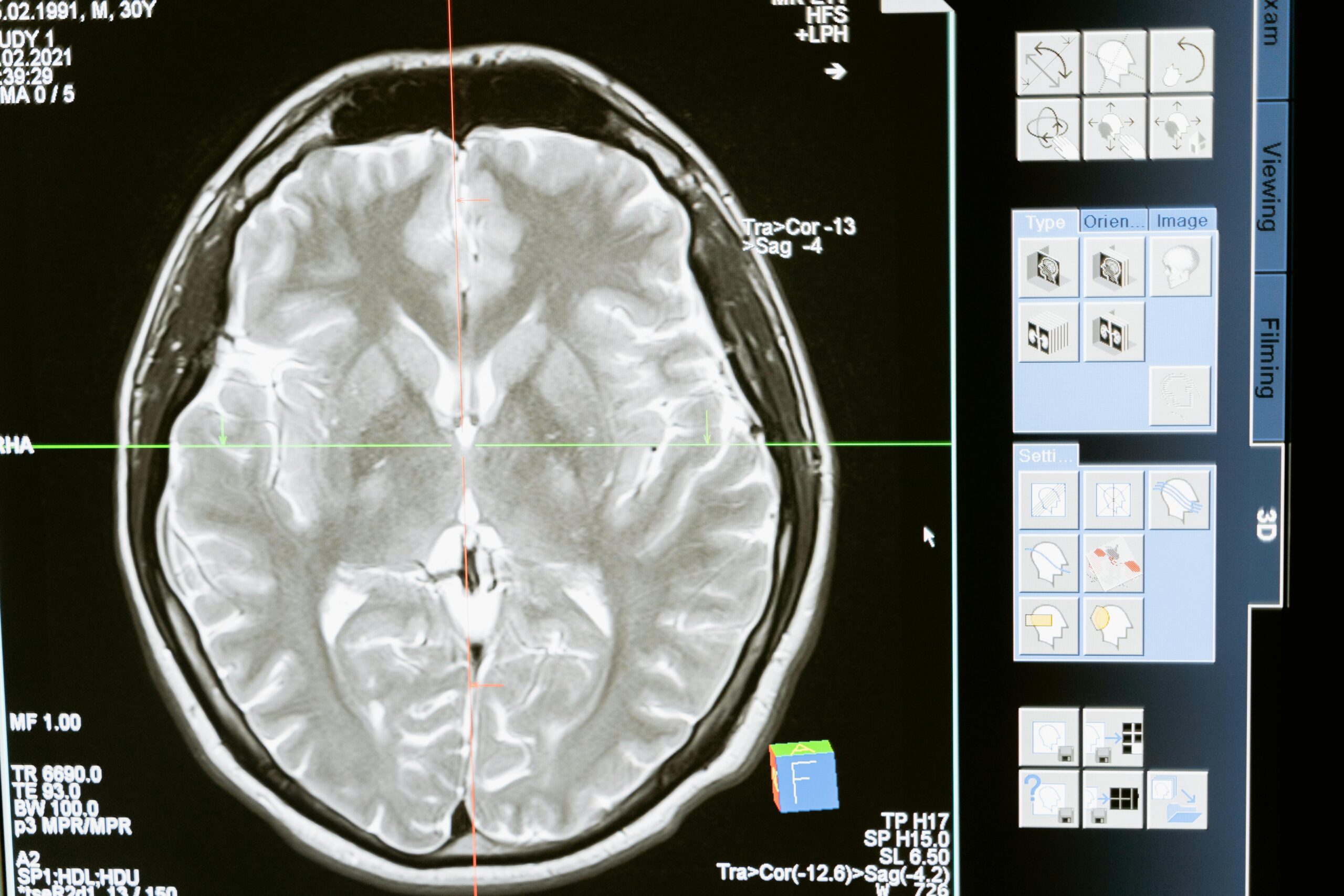
Neuroimaging studies show that experts use different brain regions when performing tasks within their domain. Activities that activate multiple areas in novice brains become localized and efficient in expert brains, demonstrating neural efficiency that parallels cognitive load reduction.
Recent investigations into cognitive load measurement have produced more sophisticated assessment methods. Pupil dilation, heart rate variability, and electroencephalography (EEG) patterns provide objective cognitive load indicators, moving beyond subjective self-reports. These tools enable real-time adaptation of training difficulty to maintain optimal cognitive challenge.
Artificial intelligence applications in education increasingly leverage cognitive load theory to personalize learning. Adaptive systems monitor performance indicators to adjust content difficulty, pacing, and support levels, matching instructional approaches to individual learner expertise and current cognitive capacity.
Cross-domain expertise transfer remains an active research area. Understanding how schemas developed in one domain might facilitate learning in related areas could revolutionize educational efficiency. Evidence suggests that deep structural understanding rather than surface similarities determines transfer effectiveness.
🚀 Strategies for Accelerating Your Expertise Development
Armed with understanding of cognitive load variance, learners can implement specific strategies to accelerate their journey toward mastery.
First, embrace progressive complexity. Resist the temptation to tackle advanced challenges before building foundational schemas. While ambition is valuable, attempting tasks far beyond current cognitive capacity produces frustration rather than learning. Build incrementally, ensuring each level becomes comfortable before advancing.
Second, seek varied practice within your current level. Schema flexibility requires exposure to different contexts, problems, and applications of core concepts. Varied practice prevents rigid, context-dependent schemas that fail when conditions change.
Third, utilize worked examples strategically during early learning phases. Studying completed examples reduces cognitive load while building initial schemas. As expertise develops, transition toward problem-solving with decreasing guidance, progressively increasing cognitive demand.
Fourth, develop metacognitive awareness of your cognitive load status. Learn to recognize when you’re operating near capacity (prime learning zone), well below capacity (need increased challenge), or beyond capacity (need simplification or support). This awareness enables intelligent self-regulation of learning activities.
Fifth, prioritize quality sleep and recovery. Cognitive load management capabilities decrease with fatigue, stress, and inadequate recovery. Schema consolidation occurs during sleep, making rest an essential component of expertise development rather than time away from practice.
The Expert Mindset: Beyond Cognitive Load Management
While reduced cognitive load characterizes expertise, true mastery involves additional psychological dimensions. Experts develop confidence that enables risk-taking and innovation within their domains. They maintain curiosity and openness to new information despite extensive existing knowledge.
Expert practitioners cultivate mindfulness about their own limitations and biases. Paradoxically, true expertise includes awareness of what one doesn’t know and willingness to question established schemas when evidence suggests refinement. This intellectual humility distinguishes genuine experts from those who have simply automated rigid procedures.
The journey toward expertise represents one of humanity’s most profound capabilities—transforming overwhelming complexity into intuitive mastery through persistent, intelligent practice. Understanding the cognitive load mechanisms underlying this transformation empowers learners across all domains to navigate their development more effectively.
By recognizing where you stand on the expertise spectrum and adapting your learning strategies accordingly, you can optimize cognitive resource allocation, accelerate schema development, and progress more efficiently toward mastery. The path remains demanding, but understanding the cognitive architecture of expertise illuminates the way forward, transforming confusion into clarity and effort into excellence.
